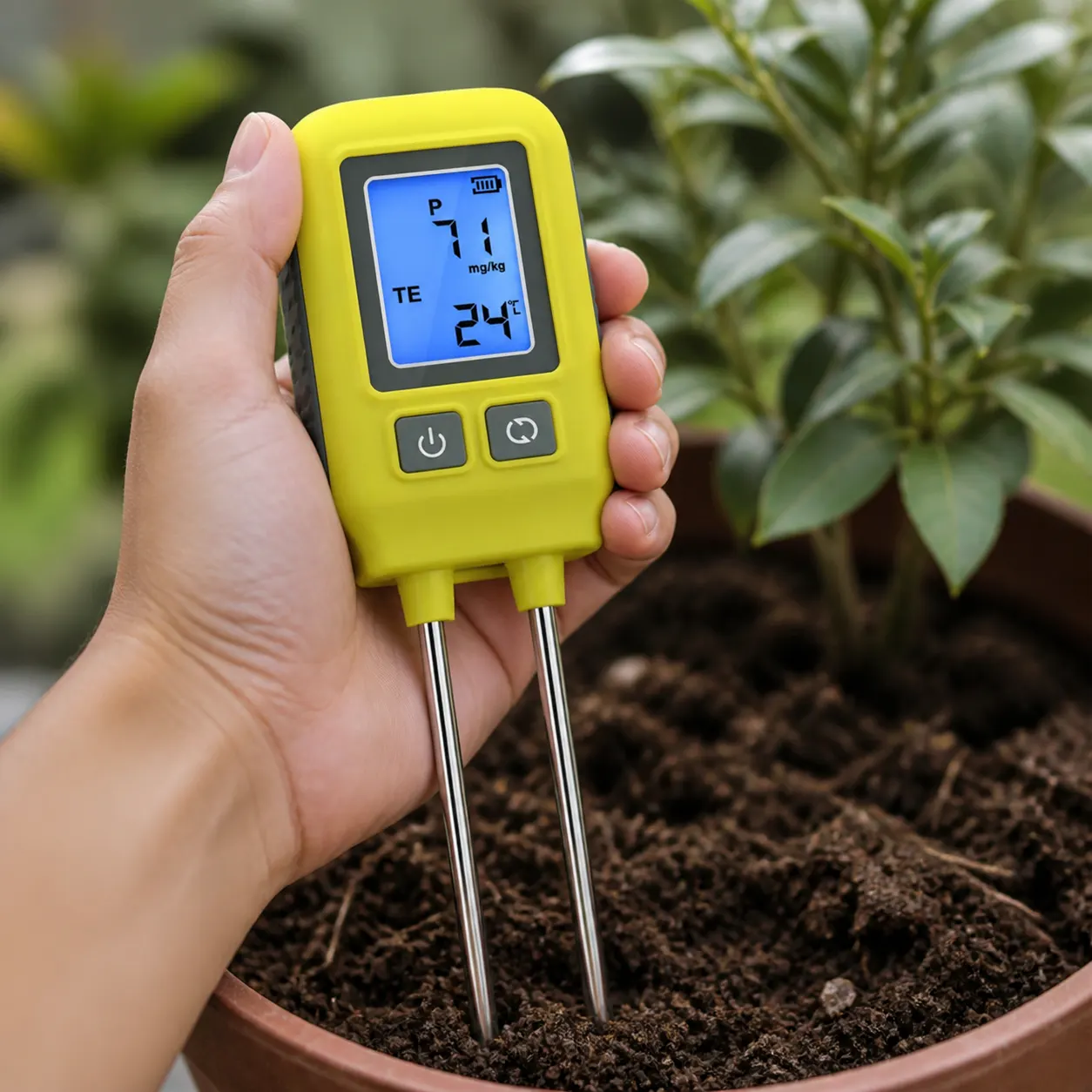
Short answer: A digital plant soil tester is most useful when it helps you pause before adding feed or changing compost. The SGS09 is listed as a digital soil fertility tester and soil testing instrument for potted planting and gardening, with 0.1 measurement accuracy in the current product attributes. Those facts support a practical comparison across pots, beds or greenhouse spaces. They do not turn one reading into a plant diagnosis. Watering, roots, compost, recent amendments and light can also explain poor growth. Use the result as one clue and treat laboratory analysis, crop prescriptions and guaranteed plant effects as manufacturer does not specify.
Ask what decision the reading will change
A soil reading earns its place when it changes the next action. You might be deciding whether to feed a tired pot, inspect drainage, compare a healthy plant with a struggling one or leave the compost alone for now. If you already know the pot is waterlogged or the roots are cramped, a number should not distract from the visible problem.
The SGS09 is described for potted planting and gardening, so its natural role is a local check at the plant location. It is not presented as a laboratory service or a full plant-health diagnosis.
| Question | A home reading may help with | Do not infer |
|---|---|---|
| Should I feed this pot? | A comparison with similar pots | A guaranteed fertiliser dose |
| Why is growth poor? | Another clue about the root zone | That nutrients are the only cause |
| Is a bed uniform? | Spot-to-spot comparison | A complete laboratory report |
| Will the plant recover? | A baseline for later checks | A guaranteed plant effect |
Use the tester consistently
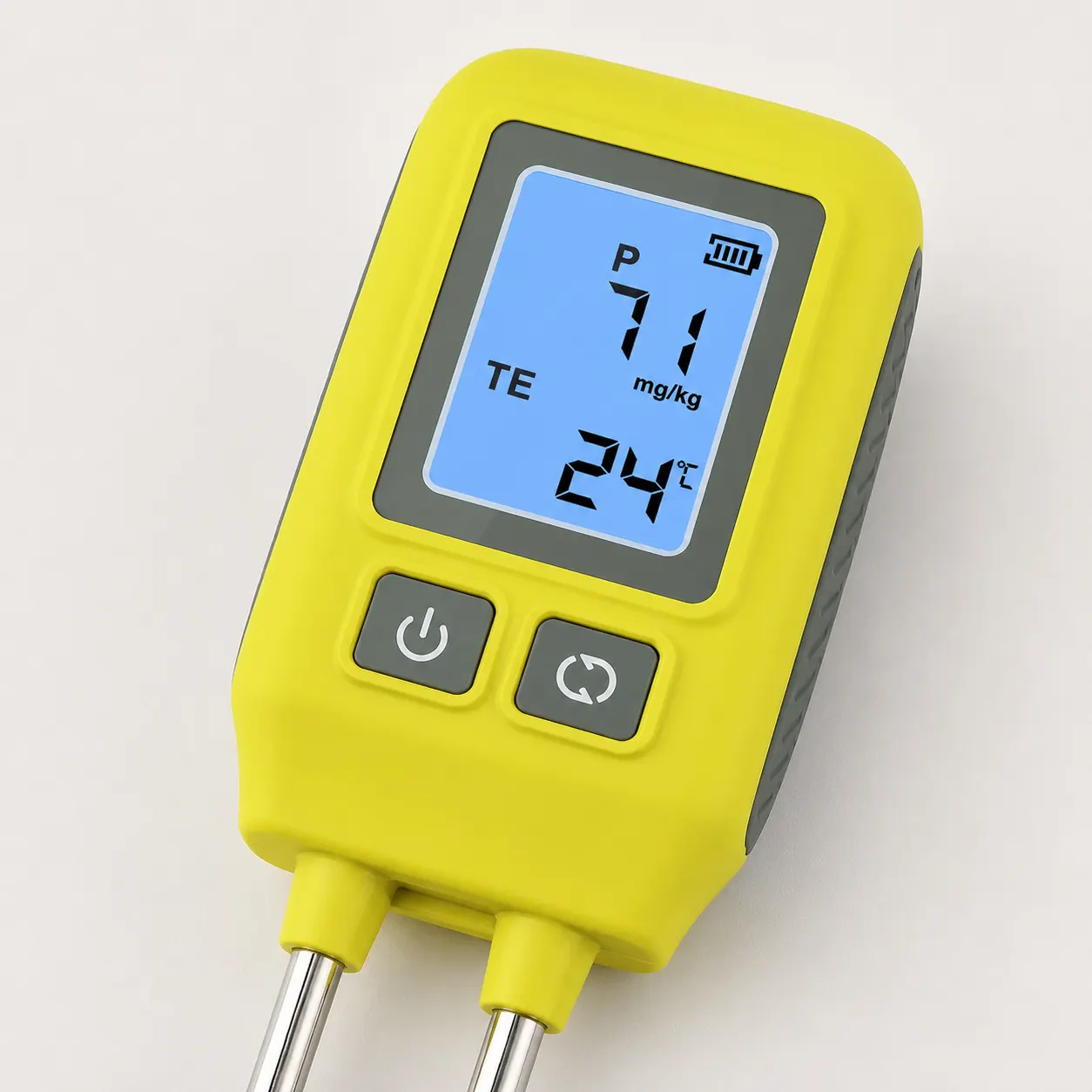
The product page lists 0.1 measurement accuracy, but accuracy on a listing does not explain every test condition or make different soils automatically comparable. Keep the method consistent: choose similar sampling points, record the plant and recent care, and avoid treating a freshly fed or freshly amended pot as a settled baseline.
RHS soil-testing advice also stresses representative sampling and warns that tests made soon after fertiliser or organic matter can be misleading. That principle matters even when you are using a handheld garden instrument rather than sending a sample away.
- Record the plant, pot or bed and the symptom you are investigating.
- Note recent feeding, compost changes, watering and repotting.
- Take readings at comparable root-zone locations rather than random surface spots.
- Compare with a similar healthy area and write the results down.
- Change one care variable, then observe before testing the whole routine again.
Keep plant symptoms in view
Yellowing, weak growth and poor flowering can have more than one cause. RHS guidance describes nutrient deficiencies as one possible explanation, while plant-specific advice can point to light, watering or other conditions. A soil reading is therefore strongest when it agrees with the plant history and the growing setting.
The SGS09 page itself says that watering, roots, compost condition and recent amendments can affect symptoms. Manufacturer does not specify that the tester can distinguish those causes or prescribe the right treatment for a particular crop.
Choose the right level of evidence
A reusable digital tester can be convenient for routine comparisons across containers and small growing areas. It may suit a gardener who wants a repeatable clue without sending every pot to a laboratory. That is a modest use case, and a useful one when expectations stay there.
For commercial crops, formal records, contamination concerns or exact amendment recommendations, use a suitable laboratory or professional route. The product page does not publish a laboratory method, certification, complete nutrient panel or crop-specific prescription. Those details are manufacturer does not specify.
Related guides and product details
Choose the SGS09 when a repeatable home soil clue will improve your next gardening decision, and keep the plant, watering and root context in the same frame. Read Soil Nutrient Tester for Potted Plants: A UK Guide for related guidance. Read Why Are My Plant Leaves Turning Yellow in the UK? for related guidance. Review the documented specification on the SGS09 Digital Soil Fertility Tester product page before ordering.
Sources and safety context
- Supports the SGS09 identity, soil-testing role, gardening applications, listed accuracy and limitation to one clue. Current Npksoil product page.
- Supports representative sampling, the limits of home testing and the need to account for recent amendments. RHS: Soil, understanding pH and testing soil.
- Supports the principle that leaf colour and growth changes can be associated with nutrient issues but need interpretation. RHS: Nutrient deficiencies.