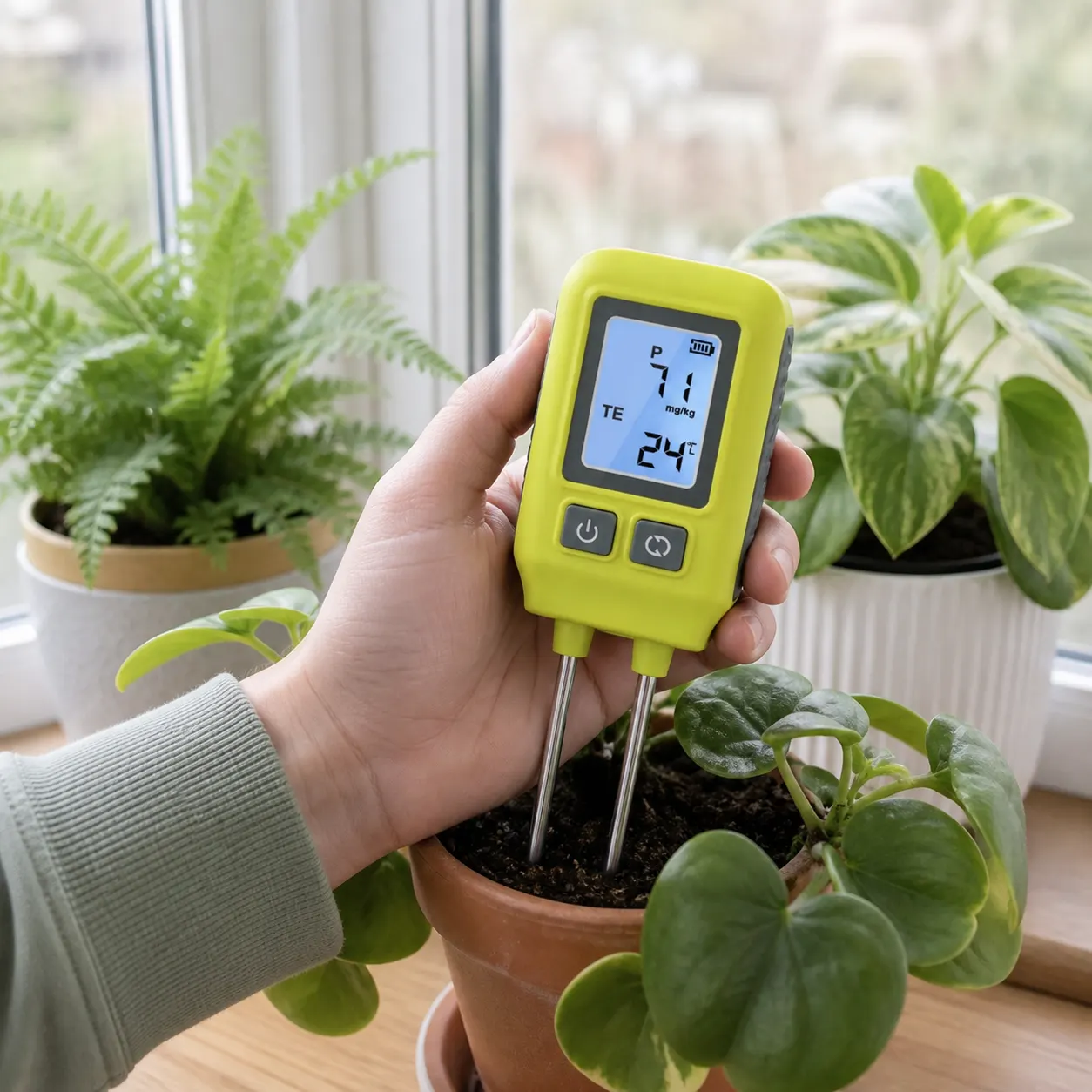
Short answer: If plant leaves are turning yellow, do not assume that more fertiliser is the first answer. Yellowing can be linked to nutrient deficiency, but watering, roots, compost, light and recent changes can point in other directions. The SGS09 Digital Soil Fertility Tester is listed for potted planting and gardening, with 0.1 measurement accuracy in the current attributes. It can add a soil-related clue to a careful check, especially when you compare a struggling plant with a similar healthy one. It cannot diagnose the cause of every yellow leaf or guarantee a recovery, and those outcomes are manufacturer does not specify.
Read the yellowing pattern and setting
Start with where the yellowing appears. Older leaves, new growth, leaf edges and whole-plant paling can point towards different questions, but the pattern is only a starting clue. Note the plant species, pot or bed, light, recent watering and any feed or compost change.
RHS guidance describes nutrient deficiencies as one possible cause of colour changes, while plant-specific advice can identify light or watering as a better explanation in some cases. A soil tester should sit inside that observation, not replace it.
| Check | What to note | Why it matters |
|---|---|---|
| Leaf pattern | Older, newer, edges or whole plant | Helps frame the next question |
| Root-zone moisture | Dry, wet or uneven | Roots may be stressed |
| Recent changes | Feed, compost, repotting or move | Timing can explain the symptom |
| Growing setting | Window, greenhouse, bed or patio | Light and exposure affect care |
Use the tester as one clue
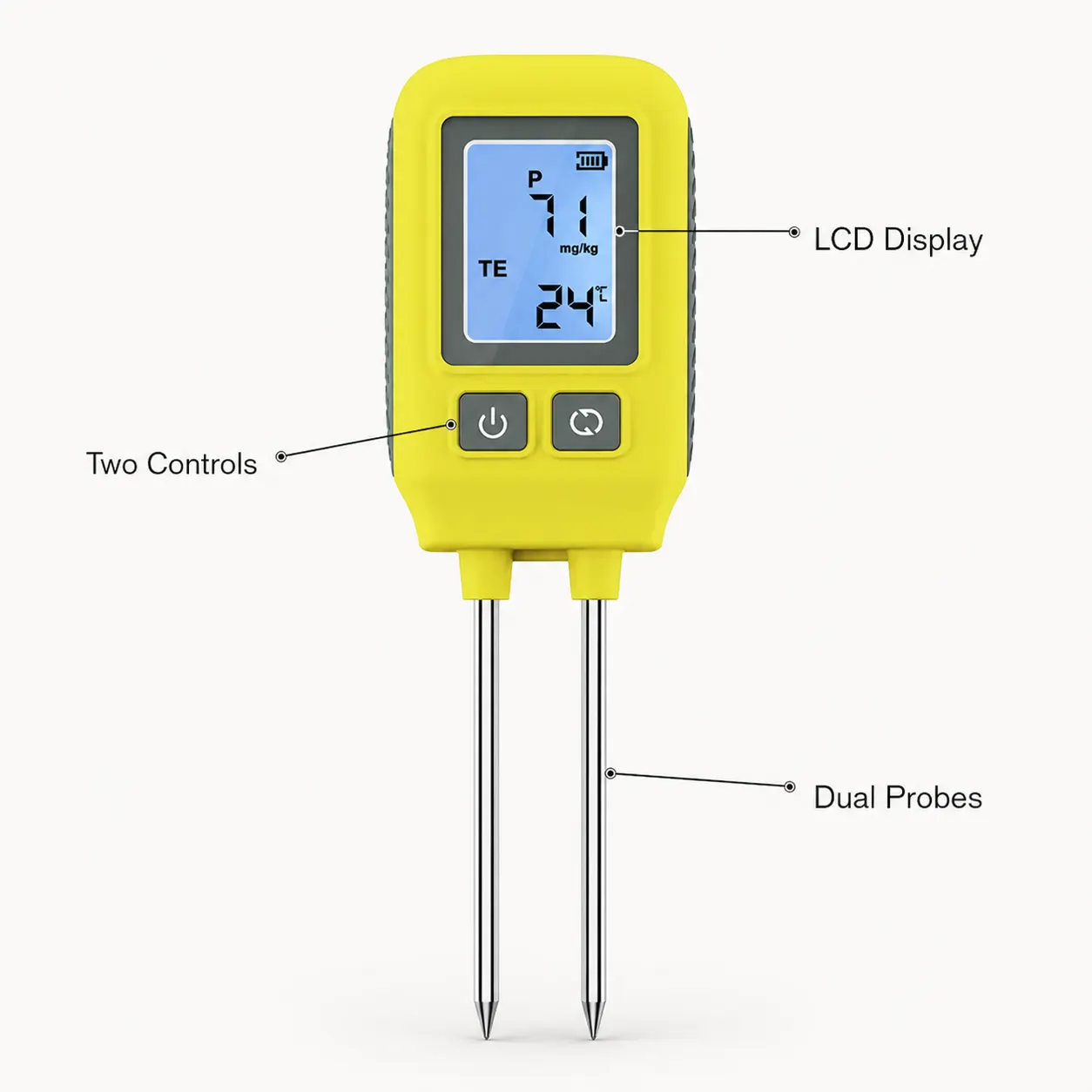
The current product page identifies the SGS09 as a digital soil fertility tester and soil testing instrument for potted planting and gardening, with a listed 0.1 measurement accuracy. Those facts make it reasonable for a repeatable garden check, but not for a full diagnosis.
RHS soil-testing guidance recommends representative sampling and notes that tests soon after fertiliser or organic matter can be misleading. Record the timing before acting. If the plant has just been fed or repotted, a number may describe a recent intervention rather than the longer-term root zone.
- Identify the plant and describe the yellowing pattern.
- Check moisture, drainage, roots, light and recent care.
- Compare the affected area with a similar healthy plant or spot.
- Record the SGS09 reading with the date and recent changes.
- Choose one measured response and observe before changing more variables.
Separate deficiency from other stress
A yellow leaf can appear when a plant is short of a nutrient, but it can also follow overwatering, drought, cold, root damage, poor light or a compacted container. If a pot has no drainage or is sitting in water, fixing that may matter more than adding feed.
The product page itself says that watering, roots, compost condition and recent amendments can affect symptoms. Manufacturer does not specify that a single reading can separate these causes or tell you which treatment will restore the plant.
Know when to stop using home clues
A home tester can be a sensible first step for a few pots, a greenhouse bench or a small border where you want to compare conditions. It is not a substitute for formal analysis when you need a written report, detailed nutrient interpretation or advice for valuable production.
Choose the next action that fits the evidence: improve drainage, adjust watering, move the plant, inspect roots, hold back from feeding or use a measured feed. The SGS09 may help organise that decision, but laboratory detail, crop prescriptions and guaranteed recovery are manufacturer does not specify.
Related guides and product details
When leaves turn yellow, use the SGS09 to add context to observation rather than to skip it; one careful change is more informative than several guesses at once. Read Plant Soil Tester Digital: What to Check Before Feeding for related guidance. Read Soil Nutrient Tester for Potted Plants: A UK Guide for related guidance. Review the documented specification on the SGS09 Digital Soil Fertility Tester product page before ordering.
Sources and safety context
- Supports the SGS09 identity, listed gardening applications, accuracy attribute and one-clue limitation. Current Npksoil product page.
- Supports the caution that yellowing patterns can be associated with different nutrient issues and need interpretation. RHS: Chlorosis.
- Supports representative sampling and caution around recent fertiliser or organic matter. RHS: Soil, understanding pH and testing soil.